Choosing hair length: inches to centimetres, and how it looks on the body
A 10 to 34 inch chart in centimetres, where each length falls on the body, and the three things that make hair look shorter than you expect.
Suvita Hair team, DelhiPublished 4 min read
Length is the choice people most often get wrong, and almost always in the same direction: the hair arrives looking shorter than they pictured. That usually comes down to how hair is measured, the texture, and the wearer's own height. This guide gives a conversion chart and explains what to allow for, so the length you order is the length you see in the mirror.
Inches to centimetres
Hair is sold in inches across most of the world. We offer every length from 10 to 34 inches in 2-inch steps. One inch is 2.54 centimetres; the table rounds to the nearest centimetre.
| Inches | Centimetres | Falls to, on an average adult (straight hair) |
|---|---|---|
| 10 in | 25 cm | Chin to jaw |
| 12 in | 30 cm | Jaw to neck |
| 14 in | 36 cm | Shoulder |
| 16 in | 41 cm | Just below the shoulder |
| 18 in | 46 cm | Upper back, around the shoulder blades |
| 20 in | 51 cm | Upper to mid back |
| 22 in | 56 cm | Mid back |
| 24 in | 61 cm | Mid to lower back |
| 26 in | 66 cm | Lower back |
| 28 in | 71 cm | Waist |
| 30 in | 76 cm | Waist to hip |
| 32 in | 81 cm | Hip |
| 34 in | 86 cm | Below the hip |
Where a length falls depends on where the hair starts. The column above assumes hair attached at the nape or crown and worn down at the back. Hair at the front starts higher on the head and falls to a shorter point on the body.
How hair is measured
Bundles and extensions are measured from the weft or bond to the tip, with the hair held straight. This is the industry standard, and it has two consequences.
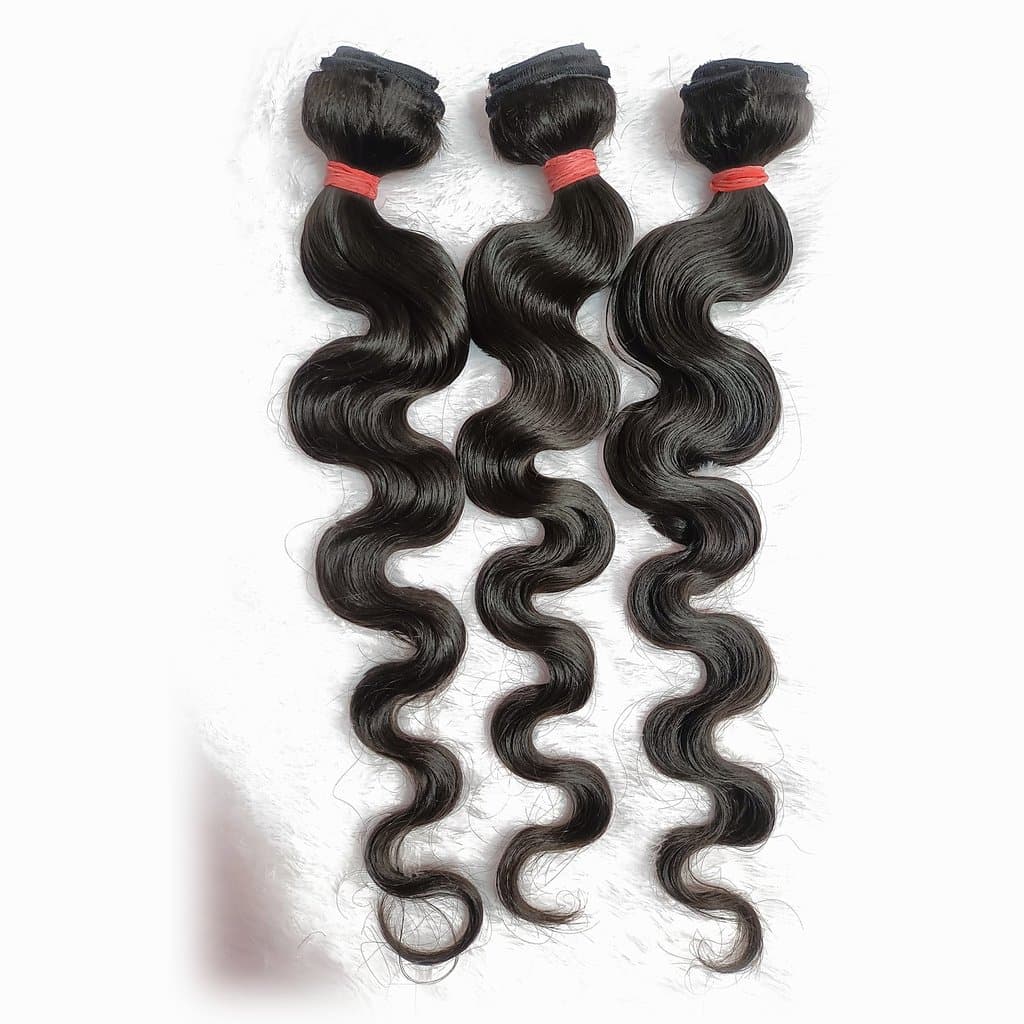
- Wavy and curly hair is measured stretched. It will look shorter when it is worn in its natural pattern.
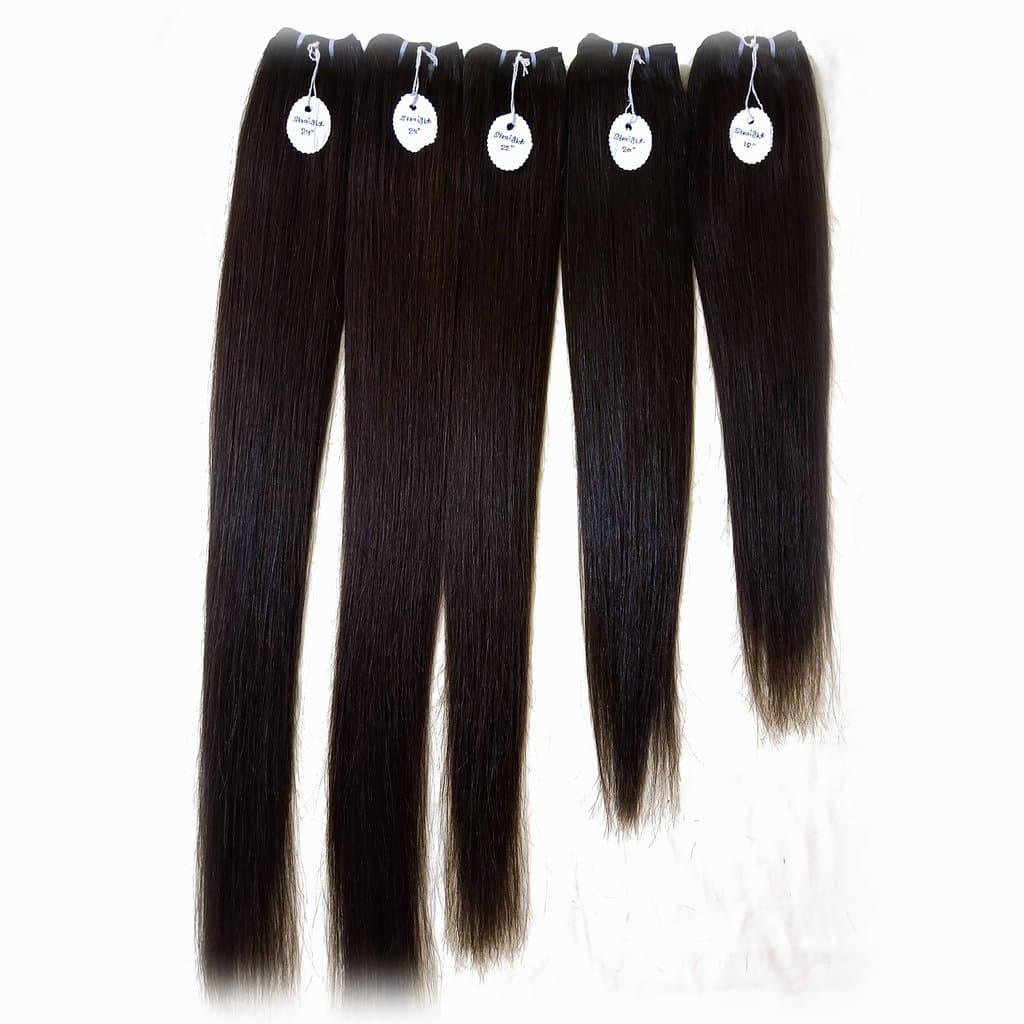
- The longest strands set the length. Real human hair bundles taper slightly, because not every strand is the same length. A 24-inch bundle has its longest strands at 24 inches and some shorter ones among them.
Three things that make hair look shorter
1. Texture
The tighter the pattern, the more length is taken up by the wave or curl. As a rough guide, allow:
| Texture | Looks shorter by about |
|---|---|
| Straight | No difference |
| Natural wavy, body wave, loose wave | 1–2 inches |
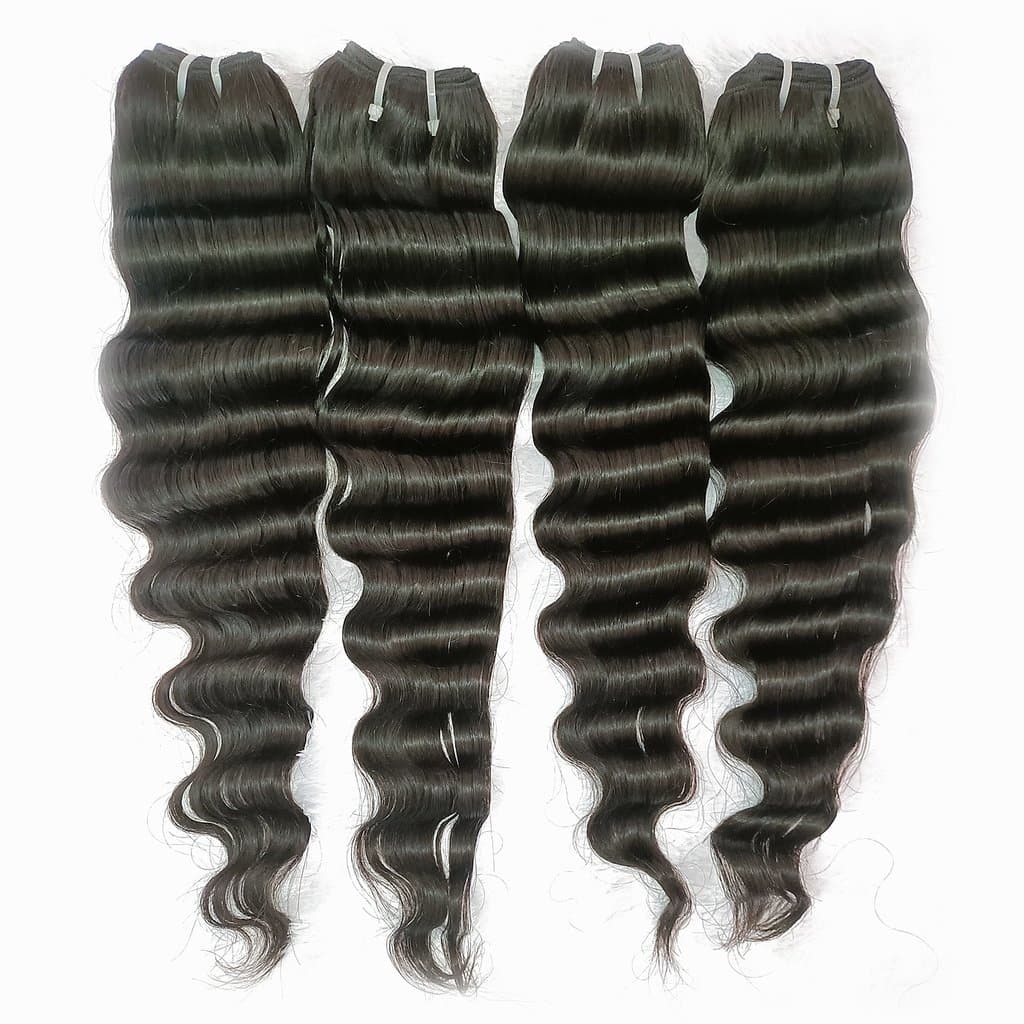
| Deep wave, water wave, natural curly, curly | 2–3 inches |
| Kinky curly | More than 3 inches; varies with how it is styled |
So if you want curly hair that falls to mid-back, around 22 inches when worn, order 24 or 26 inches. Our texture guide describes each pattern.
2. Where it is attached
A sew-in starts at the braids on your scalp. Clip-ins and tape-ins start a little below the root of your own hair. A ponytail starts wherever you tie it: a high ponytail uses up several inches of height before the hair even begins to fall. Each of these changes where the ends land.
3. Your height and build
The chart assumes an average adult. On a petite frame, 20 inches can reach mid-back; on a tall person with a long torso, the same hair may only clear the shoulder blades. Shoulders, bust and how the hair falls over them also take up length at the front.
Choosing the length for your look
Short and natural: 10–14 inches
Bobs, lobs and shoulder-length styles. Short bundles carry the most strands per 100 g, so they look full with fewer bundles, and they are the easiest to care for.
Everyday long: 16–22 inches
Below the shoulder to mid-back. This range suits most people as an everyday length; it looks natural, styles easily and is long enough for ponytails and braids.
Statement length: 24–34 inches
Lower back to hip. These lengths make a strong impression but need more care: the ends are the oldest part of the hair and see the most friction. Because bundles are sold by weight, longer bundles are thinner, so plan on more of them. Our guide on how many bundles you need gives numbers by length.
Lengths for extensions and ponytails
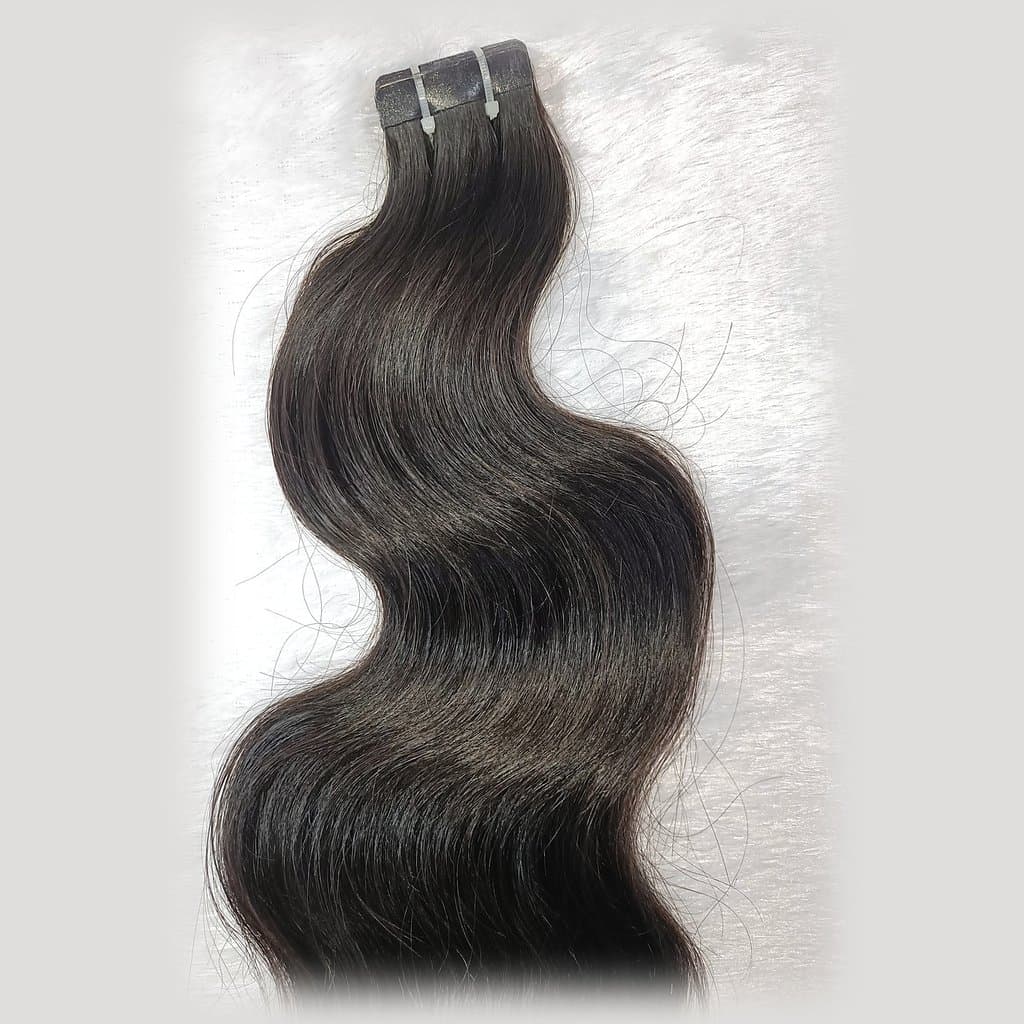
The same chart applies to clip-ins, tape-ins, keratin tips and nano rings, with one adjustment. Extensions sit slightly below the root of your own hair, and your own hair has to cover the attachment, so pick a length that is at least a few inches longer than your natural hair. If your hair is shoulder length, 18 inches and up gives a visible change; 14 inches will mostly add thickness rather than length.
For a ponytail, measure from where you tie the ponytail, not from the crown. A high ponytail of 24 inches falls to roughly where a 20-inch sew-in would sit.
Mixing lengths
Many installs combine lengths, for example 18, 20 and 22 inches, which gives a gentle taper instead of a blunt line at the bottom. It looks more like hair that has grown. A common approach is to place the longest pieces at the nape and shorter ones towards the crown.
Before you order
- Decide where the hair will start on your head.
- Measure from there to where you want the ends.
- Add the allowance for your texture.
- Round up to the next available length.
- If the length is 24 inches or over, check whether you need an extra bundle for fullness.
You can always have hair trimmed shorter, but you cannot add length once it arrives. If you are between two lengths, the longer one is usually the safer choice.
Written by the Suvita Hair team in Delhi. Suvita Hair Global Pvt Ltd makes and exports 100% Remy Indian human hair. Questions about this guide: WhatsApp or sales@suvitahair.com.