Why blonde #27 and #613 cost more: what lifting does to hair
Dark hair has to be lifted to become blonde. What that process does to the hair, why it takes skill, and how to keep blonde hair in good condition.
Suvita Hair team, DelhiPublished 4 min read
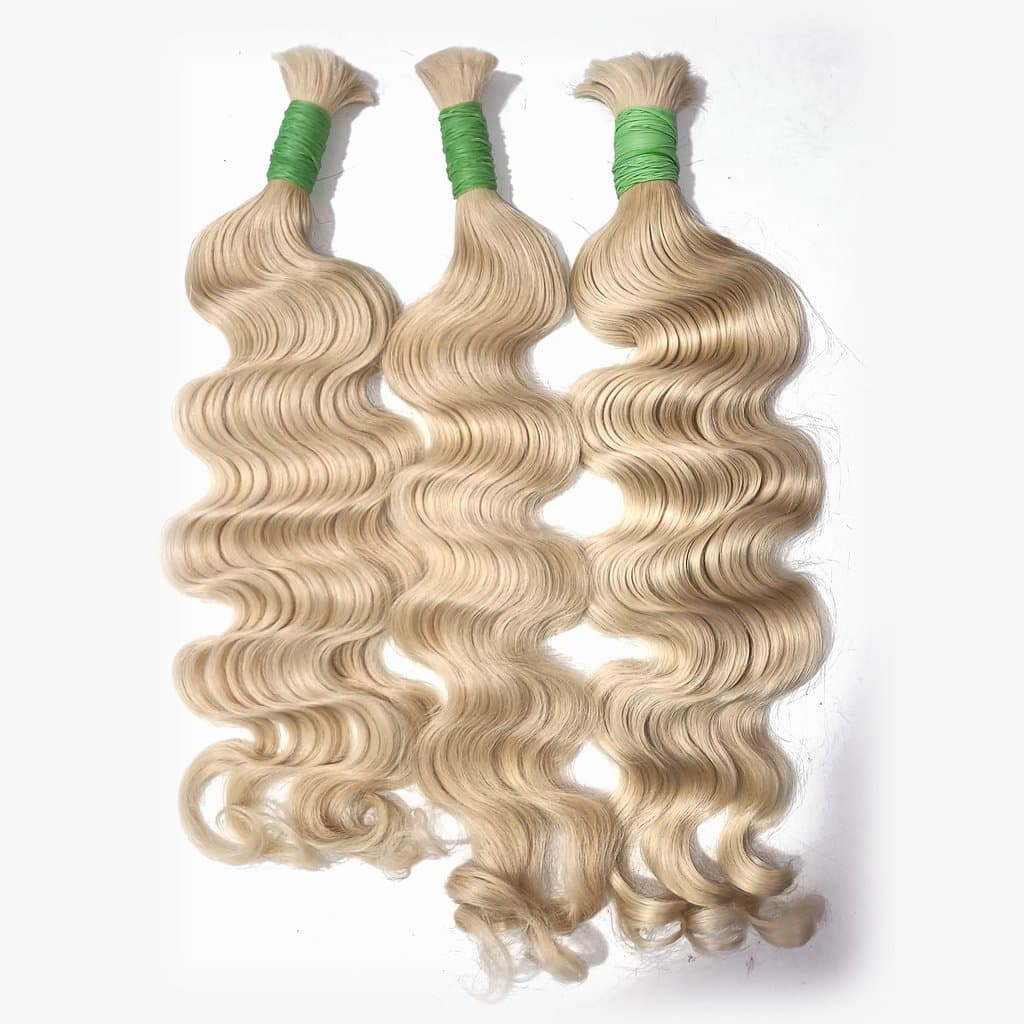
Look at any human hair price list and the pattern is the same: natural black and the browns cost one price, and the blondes cost more. It can look like a premium charged for a fashionable shade. It is not. The difference reflects real extra work and real risk, and understanding it also tells you how to care for blonde hair once you have it.
Almost all human hair starts dark
Indian temple hair grows in shades of black and very dark brown. Hair that grows naturally blonde is rare, and is not available in the quantities and lengths the hair trade needs. So every blonde bundle you see began as dark hair that was lightened.
The shade codes used across the trade make this visible:
| Code | Shade | How it is made |
|---|---|---|
| #1B | Natural off-black | The hair's own shade |
| #2 | Darkest brown | Produced from darker hair |
| #4 | Medium brown | Produced from darker hair |
| #27 | Honey blonde | Lifted from dark hair to a golden blonde |
| #613 | Platinum blonde | Lifted from dark hair to the palest blonde |
What “lifting” means
Hair gets its colour from pigment inside the strand. To make dark hair lighter, that pigment has to be broken down and removed, which is called lifting. The process uses a lightener that opens the outer cuticle layer so it can reach the pigment inside, and then works on that pigment over time.
Dark hair does not go straight to blonde. As pigment is removed it passes through red, orange and yellow stages. A honey blonde like #27 stops at a warm golden stage. A platinum like #613 has to go much further, to a pale yellow that can then be toned towards a neutral or cool blonde.
The further the hair is lifted, the more its cuticle has been opened and the more of its inner structure has been changed. Lifting is always a balance between reaching the shade and keeping the hair strong, soft and intact.
Why it costs more
More time and more steps
Lifting to #613 is rarely a single quick step. It is done carefully, often in stages, with the hair checked as it goes. That takes far more time and labour than producing a natural shade, and #27 sits in between.
Skill
Lifting too fast or too far damages the cuticle, leaving hair that feels rough, tangles and breaks. Lifting too little leaves brassy orange tones. Getting an even, consistent shade across a whole bundle, from weft to tip, while keeping the hair in good condition takes experienced hands.
Loss
Not every batch of lifted hair meets the standard. Hair that ends up uneven or overprocessed has to be set aside. That loss is part of the true cost of every blonde bundle that does pass.
Starting with good hair
Only hair with an intact, aligned cuticle survives lifting well. Remy hair is the right starting point, because hair with a stripped or mixed cuticle tends to turn dry and tangled once lightened. If you want to understand why, our guide to Remy vs non-Remy hair explains the cuticle.
At Suvita, #27 and #613 are lifted in our own facility in Delhi, and the lighter shades are priced higher to reflect this work.
#27 or #613?
- #27 honey blonde is warm and golden. It blends with dark blonde and light brown hair and works well in ombré looks with a dark root.
- #613 platinum is the palest standard shade. It is the base to choose if you want to tone to an ash or icy blonde, or apply a pastel or fashion colour yourself.
Screens show colour differently. If an exact match matters, order one bundle first and compare it with your hair in daylight. With no minimum order, a single bundle is a sensible first step.
Checking blonde hair when it arrives
Blonde hair shows its quality more openly than dark hair, so it is worth a careful look before you install or tone it.
- Even shade. Hold the bundle up in daylight. The colour should be the same at the weft, the middle and the ends, with no darker patches near the seam.
- Soft ends. Run the last few inches through your fingers. Overprocessed hair feels rough, snaps easily and looks fluffy rather than smooth.
- Wet test. Wet a small section. Well-lifted hair feels slippery and smooth when wet; overprocessed hair feels gummy and stretches before it breaks.
If something looks wrong, photograph it in daylight before you do anything else to the hair.
Caring for blonde hair
Lifted hair has a more open cuticle than natural dark hair, so it loses moisture faster and needs a little more attention. The general routine in our care guide applies, with a few additions:
- Condition every wash, and use a deep conditioning treatment from time to time.
- Use lower heat and always use a heat protectant. Blonde hair shows heat damage sooner.
- Use a purple or toning shampoo occasionally if you want to keep yellow tones in check, but not every wash, as it can dry the hair.
- Protect it from chlorine and strong sun, which can discolour and dry blonde hair.
- If you want to colour it darker later, that is low risk; going lighter again is not.
Treated this way, blonde hair can last as long as any other shade. With proper care, Suvita hair lasts 3–5 years, in blonde as in black.
Written by the Suvita Hair team in Delhi. Suvita Hair Global Pvt Ltd makes and exports 100% Remy Indian human hair. Questions about this guide: WhatsApp or sales@suvitahair.com.