Hair textures explained: natural patterns vs steam-set waves
Nine textures, two ways of making them. How the donor's own pattern differs from a steam-set wave, and how to pick one that blends with your hair.
Suvita Hair team, DelhiPublished 4 min read
Texture names in the hair trade are not standardised. One supplier's “body wave” is another's “loose wave”, and “curly” can mean anything from a soft spiral to a tight coil. This guide explains the nine textures we make, what each one looks like, and the one distinction that matters most and is rarely explained: whether a pattern is the donor's own or has been set.
Natural pattern vs steam-set
Human hair arrives in whatever pattern it grew in. Most temple hair from South India grows straight, wavy or loosely curly. Those patterns can be sold as they are. To offer a wider range of looks, hair can also be set into a new, uniform pattern.
At Suvita, three of our textures are the donor's natural pattern and six are steam-set. Steam-setting means the hair is wound into the pattern and set with steam and heat. We use no chemicals for setting. This matters because chemical perming changes the inner structure of the hair and can leave it drier and weaker.
| Natural pattern | Steam-set | |
|---|---|---|
| Textures at Suvita | Straight, natural wavy, natural curly | Body wave, loose wave, deep wave, water wave, curly, kinky curly |
| Consistency | Varies slightly bundle to bundle, as people's hair does | Uniform; bundles match each other exactly |
| Over time | Keeps its pattern | Holds its pattern well with care; can relax gradually with heat styling |
| Straightening | Straightens with heat; returns when washed | Straightens with heat; returns when washed |
The three natural textures
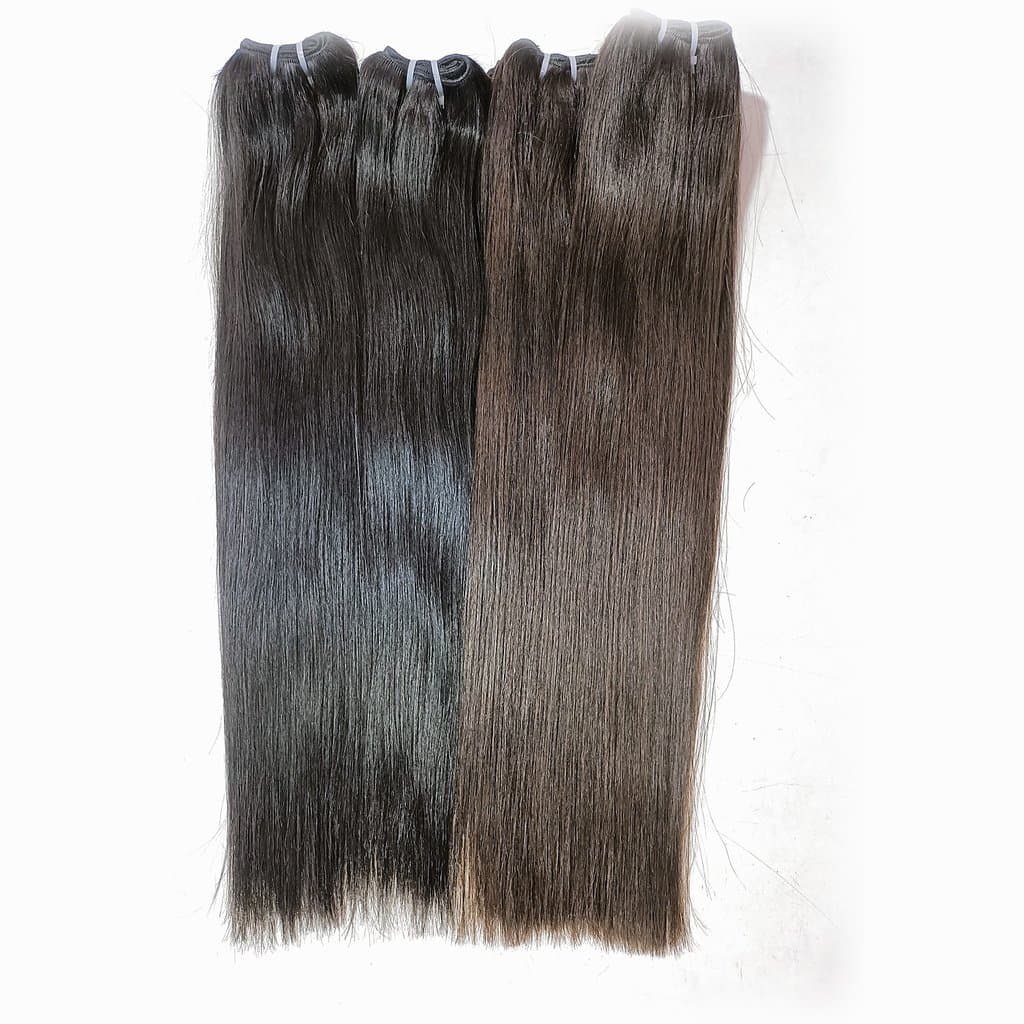
Straight
Lies flat with soft movement and reflects light along its length. The easiest texture to blend with naturally straight or relaxed hair, and the most popular base for colouring and heat styling. It can be curled with tools and will hold the style for the day.
Natural wavy
The donor's own wave: a soft, slightly irregular S-shape that varies from strand to strand. It looks relaxed and lived-in rather than styled. It softens when washed and holds a curl well when set with tools.
Natural curly
The donor's own curl, a loose to medium spiral. Because it is not set, the pattern varies between bundles. For a consistent look, buy all the bundles for one install together so they can be matched as closely as possible.
The six steam-set textures
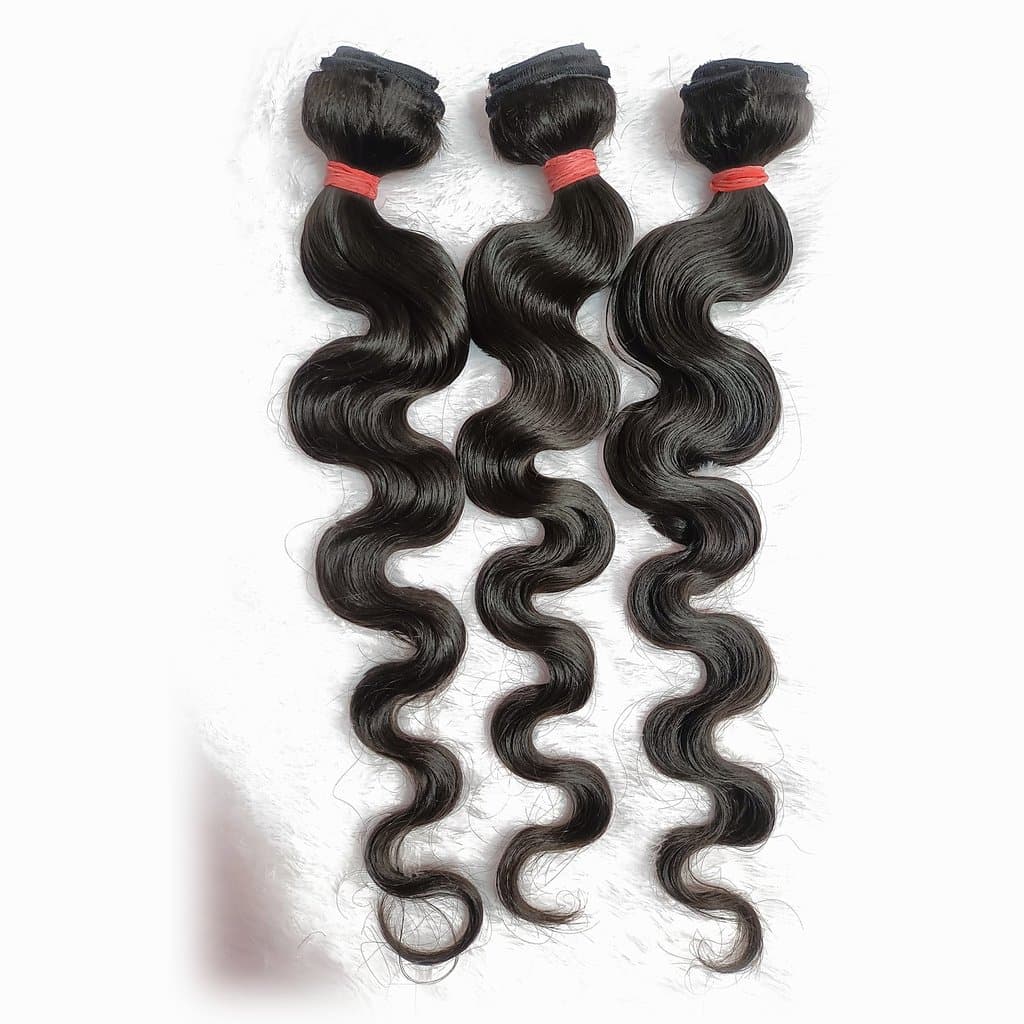
Body wave
A loose, even S-wave that runs the length of the hair. It is the most versatile texture: it looks soft and full when worn as it is, straightens easily, and returns to its wave on the next wash. If you are unsure which texture to choose, body wave suits most faces and most styles.
Loose wave
A wider, softer wave than body wave, sitting between natural wavy and body wave in look. It is particularly good at long lengths, where a tighter pattern would look heavy.
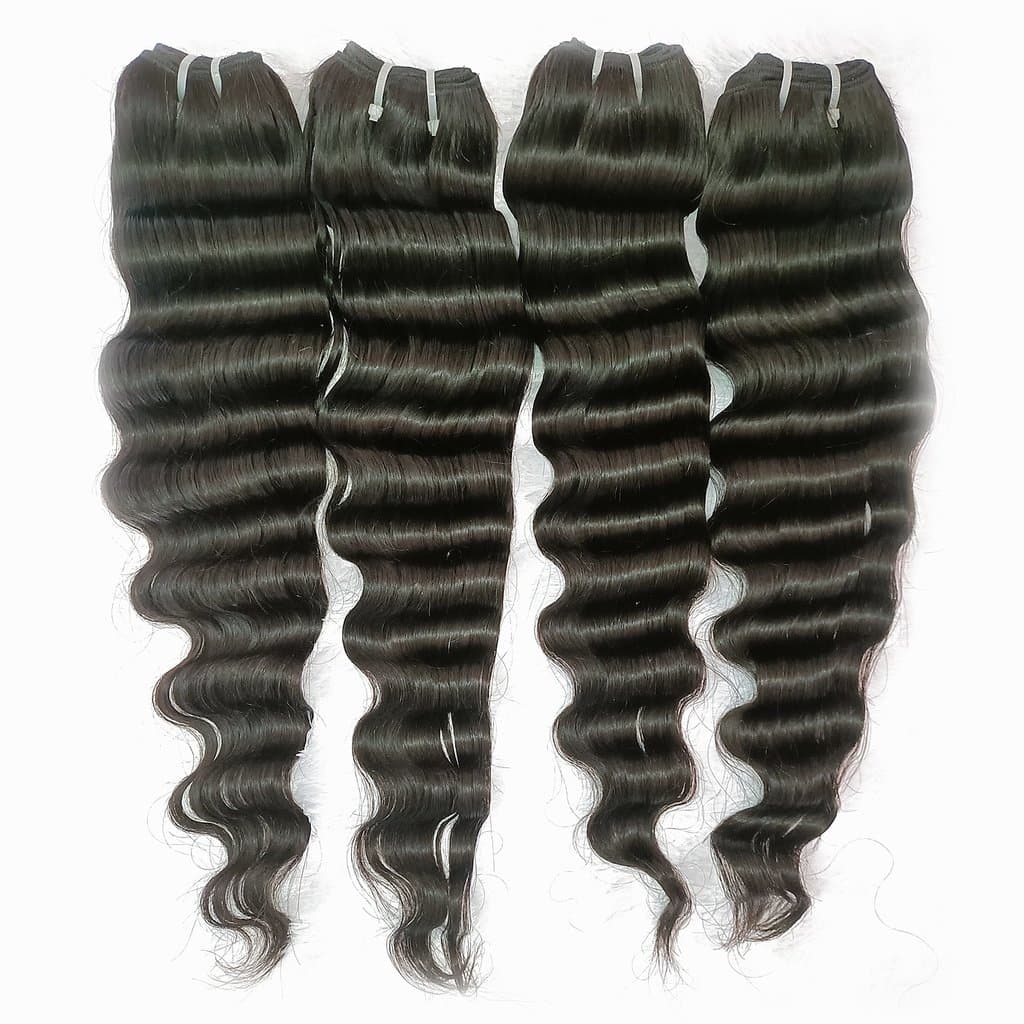
Deep wave
A tight, defined, uniform wave that reads as curly from a distance. It keeps its definition when wet and gives a lot of volume at mid lengths.
Water wave
An irregular, slightly crimped wave, like hair left to dry after swimming. It has more volume than deep wave at the same length and a more casual look.
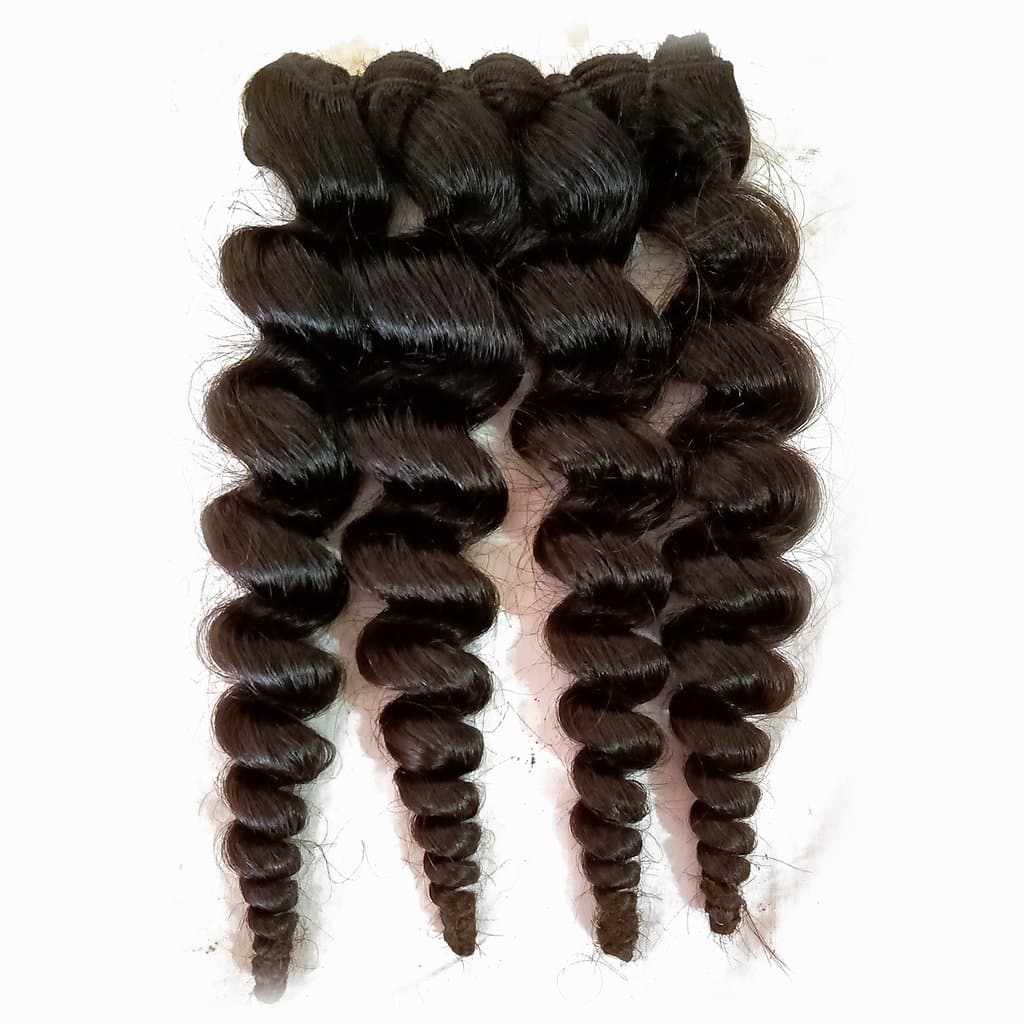
Curly
A spiral curl, set uniformly from root to tip. It needs moisture to keep its definition and looks best styled with a leave-in conditioner or curl cream.
Kinky curly
A tight coil that blends with tightly coiled natural hair. It shrinks noticeably when wet and when worn as it is, so its stated length is much longer than how it looks on the head.
How to choose a texture
Blending with your own hair
If you are leaving any of your own hair out, or if extensions will sit alongside your hair, match the texture as closely as you can. Hold the bundle or a photo next to your hair after it has been washed and left to dry naturally, not straightened. If you fall between two textures, the looser one is usually easier: it is simpler to add wave with tools than to calm a pattern that is too tight.
For a full install or wig
When none of your own hair shows, choose for the look you want. Straight and body wave are the most adaptable. Deep wave and water wave give volume with little styling. Curly and kinky curly make a statement and need the most moisture.
Thinking about upkeep
- Lowest upkeep: straight and body wave. Wash, condition, air-dry or blow-dry.
- Medium upkeep: loose wave, natural wavy, water wave and deep wave. Scrunch with a little product while damp to keep the pattern defined.
- Highest upkeep: natural curly, curly and kinky curly. Regular moisture, finger-detangling and a satin bonnet at night.
Can you change the texture later?
Yes, to a point. Every texture can be straightened with heat and will usually return to its pattern on the next wash. Straight hair can be curled for the day with tools. What you should not do is try to permanently straighten or perm extensions with chemicals: it is hard on hair that no longer has a scalp feeding it. Choose the texture closest to how you will wear it most of the time.
For washing and drying each texture, see our care guide. For how texture changes the number of bundles, see how many bundles you need.
Written by the Suvita Hair team in Delhi. Suvita Hair Global Pvt Ltd makes and exports 100% Remy Indian human hair. Questions about this guide: WhatsApp or sales@suvitahair.com.