Tape-in vs clip-in vs keratin tip vs nano ring: choosing a method
How each attachment works, how long it stays in, what upkeep it needs, and which hair types each one suits best.
Suvita Hair team, DelhiPublished 4 min read
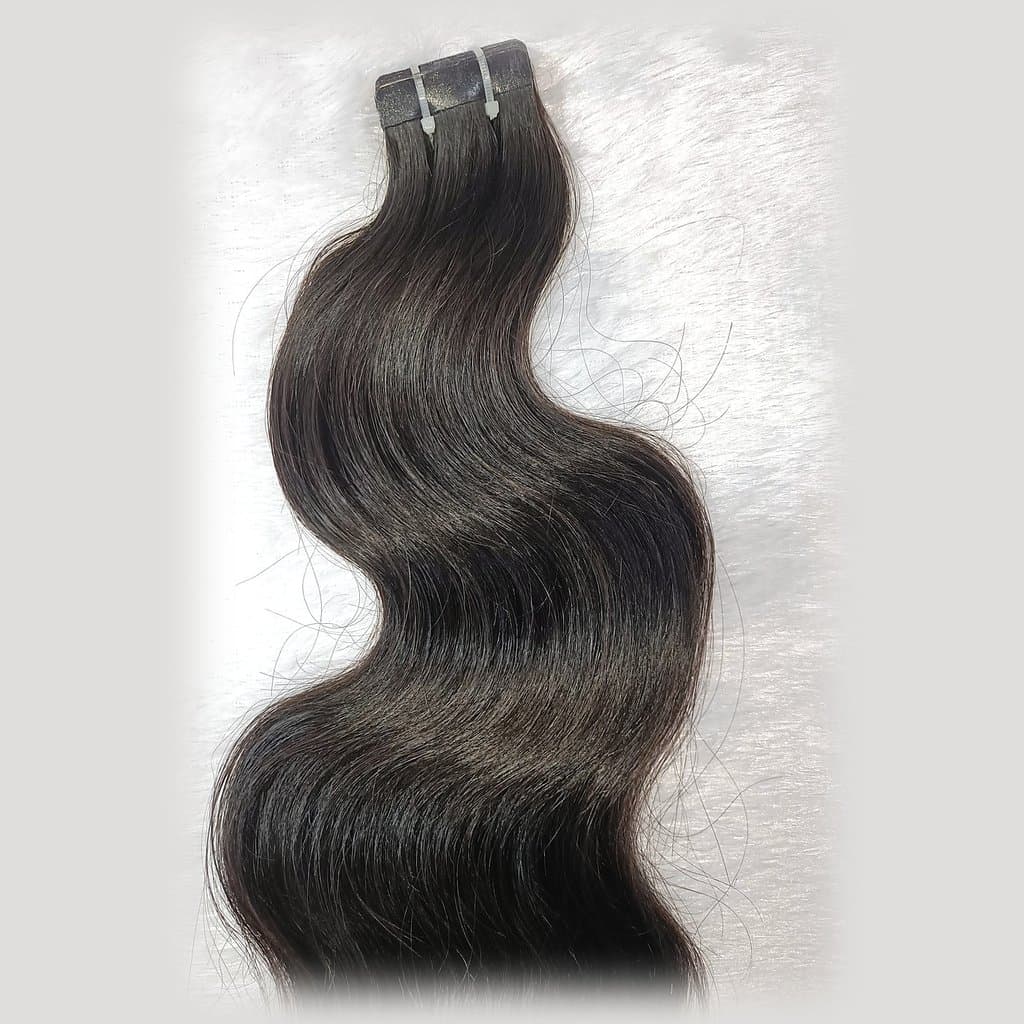
The hair itself can be identical across every extension method. What changes is how it attaches to your own hair, and that decides almost everything else: how natural it looks up close, how long it stays in, what it costs to maintain and whether you can put it in yourself. Here is how the main methods compare, without the sales talk.
The four families at a glance
| Method | How it attaches | Stays in | Who fits it |
|---|---|---|---|
| Clip-in | Wefts on small clips, snapped onto your hair | A day at a time | Yourself, in minutes |
| Tape-in | Thin wefts with adhesive tape, sandwiched around a slice of your hair | Usually 6–8 weeks, then re-taped | A stylist |
| Keratin tip (K, U, V, flat) | Individual strands fused to your hair with a keratin bond and heat | Usually a few months | A stylist |
| I-tip | Individual strands fixed with a small micro ring, no heat | Usually a few months | A stylist |
| Nano tip / nano ring | Individual strands with a very small ring, no heat or glue | Usually a few months | A stylist |
Clip-in extensions
A clip-in set is a full head of hair cut into wefts of different widths, each with small silicone-lined clips sewn on. You section your hair, snap the clips in close to the root, and let your own hair fall over them. They come out at night.
- Good for: occasional wear, events, trying extensions for the first time, anyone who does not want a salon commitment.
- Strengths: no damage from bonds or adhesive when used sensibly, no maintenance appointments, and the hair lasts longest because it is not worn constantly.
- Limitations: you need enough hair of your own to hide the clips. Wearing them every day for long hours, or sleeping in them, can strain the hair at the clip points.
Tape-in extensions
Tape-ins are thin, flat wefts with adhesive tape along the top. A stylist takes a thin slice of your hair and places one tape weft underneath and one on top, so they bond together around it.
- Good for: fine or thin hair, people who want a flat, discreet result and less bulk than bonded strands.
- Strengths: the flattest attachment there is; quick to install compared with strand methods; the hair can be re-taped and reused.
- Upkeep: tape-ins are usually re-taped and moved up every 6–8 weeks as your hair grows. Avoid oils and conditioner on the tape.
- Limitations: less flexible for high ponytails, because the wefts are a few centimetres wide.
Keratin tip extensions
Keratin tips are individual strands of hair, each with a small bond at the top. There are several shapes, which affect how the bond sits on the head:
I-tip
A straight, cylindrical tip that is attached with a micro ring (a tiny bead) clamped around the tip and a small section of your hair. No heat and no glue are used, and the strand can be removed by opening the ring.
K-tip and U-tip
Keratin bonds that are fused to your hair with a heated tool. The K-tip is flat and slightly wider; the U-tip (sometimes called nail tip) is shaped like a U and wraps around the section of hair. They give one of the most secure strand attachments.
V-tip and flat tip
Thinner keratin bonds that lie flatter against the head. They are often chosen for fine hair and near the hairline, where a bulkier bond could show.
- Good for: a strand-by-strand look with natural movement, including high ponytails, since every strand moves independently.
- Upkeep: strand installs are usually moved up or replaced every few months, depending on how fast your hair grows.
- Limitations: installation takes longer than tape-ins and needs a trained stylist. Fused bonds must be removed with the correct remover, never pulled out.
Nano tip and nano ring extensions
Nano tips use a much smaller ring than standard micro rings. The bond is tiny, which makes it very hard to see or feel, even on fine hair.
- Good for: very fine hair, or anyone who found other bonds visible.
- Strengths: no heat and no glue; very discreet; strands move freely.
- Limitations: the smallest bond holds the smallest section of hair, so installation takes time and needs a skilled stylist.
How to choose
How often will you wear them?
For special occasions or a few days a week, clip-ins are hard to beat. For every-day wear without daily fitting, choose one of the semi-permanent methods.
What is your hair like?
Fine or thin hair usually does best with tape-ins, nano rings, V-tips or flat tips, which spread weight and stay flat. Thicker hair can take any method; clip-ins and K-tips or U-tips both work well.
How do you style your hair?
If you love high ponytails and updos, strand methods (keratin tips, I-tips, nano) give the most freedom. Tape-ins work for most down styles and lower ponytails.
How much maintenance suits you?
Clip-ins have none beyond washing. Tape-ins need regular re-taping. Strand methods need fewer, longer appointments.
How much hair to order
Extensions are sold by weight. A 100 g set is enough for a full head for most people. Choose 150 g or more for long lengths, very thick hair, or a dramatically fuller look; we offer 100, 120, 150, 200 and 250 g. For help choosing length, see our length guide.
Whatever method you choose, care makes the difference between hair that lasts one install and hair that lasts many. Our care guide covers each method.
Written by the Suvita Hair team in Delhi. Suvita Hair Global Pvt Ltd makes and exports 100% Remy Indian human hair. Questions about this guide: WhatsApp or sales@suvitahair.com.